If you live in gardening zone 9B in Florida, I’m sure you’ve had quite a few gardening funerals.
< pause to mourn the unsuspecting plants here >
SCENE: You walk into Lowe’s and see perfect, stunning flowers nonchalantly sitting on the rack. Immediately smitten, you hurriedly put them in your shopping cart with extra glee. “My yard is going to look like Epcot Center at Disney World with these gorgeous flowers!” you exclaim. You speed home, deposit them into the ground, and wait with expectancy. However, despite doing everything right, they die and go to plant heaven in just 2 short months!
OH NO! Epic Fail!

Table of Contents
We Don't Do it Like Up North!
You aren’t losing your mind. Gardening in Florida is NOTHING like gardening in other states. Here in Central Florida, we have an extremely unique climate that requires selecting plants carefully because Zone 9B straddles both cooler areas north and tropical zones to the south. The challenge is choosing plants that can handle the extremes of occasional freezes, and brutal 95-degree heat. And let’s not forget the summer monsoon downpours. That’s a tall order!
One of the best ways to choose plants is to choose natives. Natives have already adapted to our crazy climate and will just roll with the punches. But there are also plenty of Florida-friendly plants that have adapted to our sandy soil, torrential downpours, and relentless sun.
Here is an overview of some of my favorites that I’ve grown in my yard for years. They are tough plants suited just for your zone 9b garden.
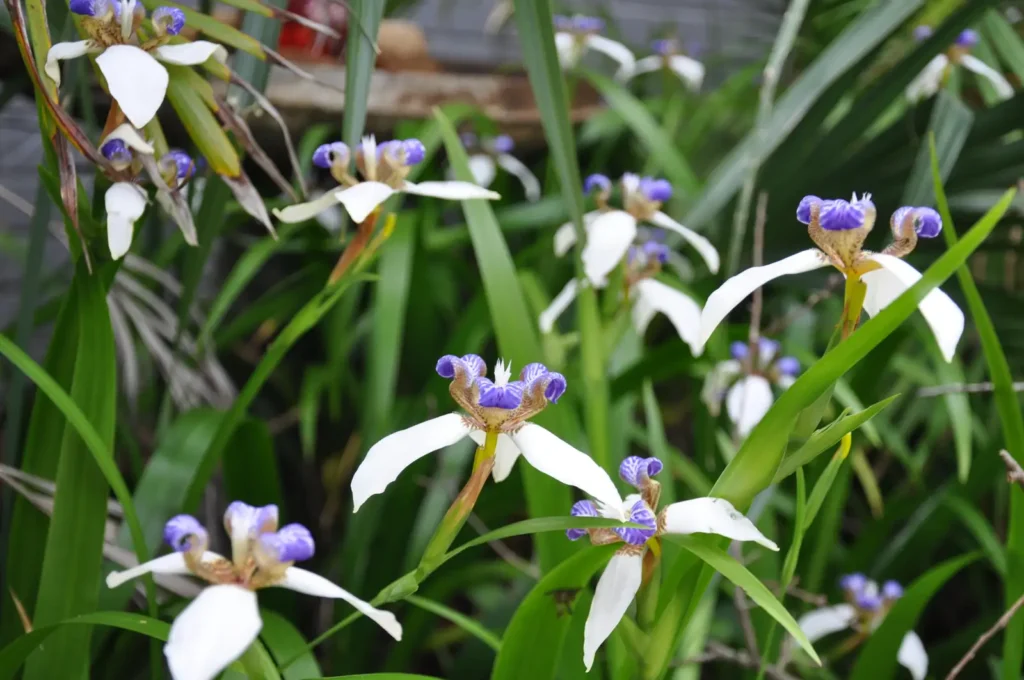
Walking Iris
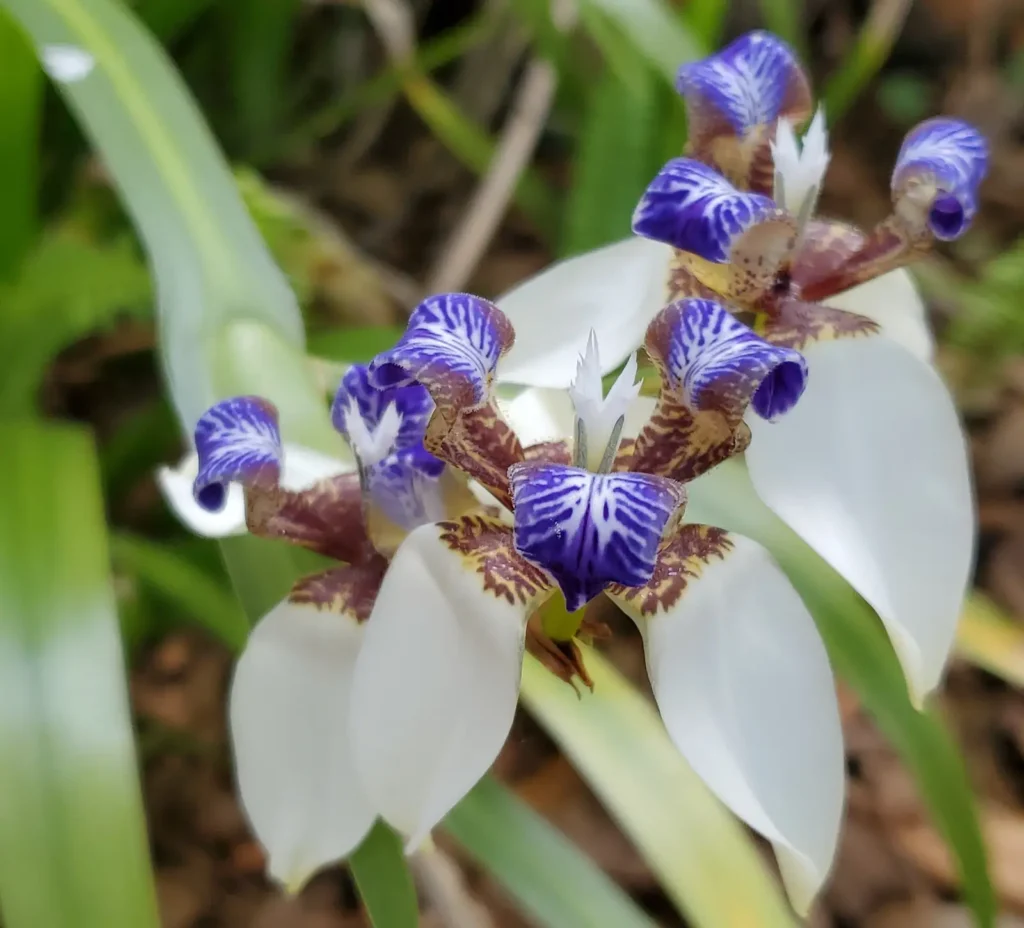
The Walking Iris is a real perennial gem. As with most irises, it has tall, slender medium-green leaves that form a fan pattern. It’s quite happy in shadier areas and can handle our drier months, although it does need regular watering.
It’s unique quality is that it reproduces by sending out pups which re-root themselves nearby, hence the name “walking”. This process allows the plant to spread easily. Thankfully, it isn’t an aggressive spreader. Those pups can be removed and transplanted elsewhere in the garden. They usually take to their new spot quickly without a lot of fuss. And they look lovely in pots with their cascading pups.
While it’s attractive all year, my favorite aspect of this plant is its showy flowers. Stunning white, purple, maroon and yellow flowers herald spring in March through May with a prolific display. And they are worth the wait! I keep them in pots around my yard so that I’m sure to enjoy them everywhere. It’s like watching fireworks – a new crop will explode every few days. Each flower only lasts a day, but the plant will continue to produce more flowers for weeks.
There are other species of walking iris in different colors available. I recommend looking in a local nursery to find walking iris, or even Etsy, as you won’t find them at the box stores. However, the phenomenal display each spring is worth the effort to find them.
Mystic Spire Salvia
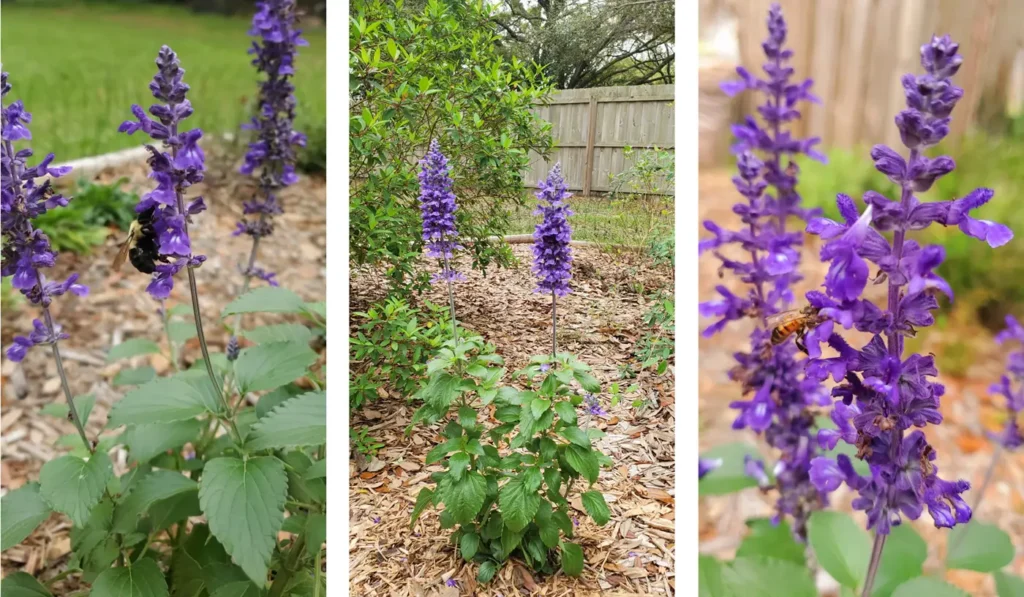
Many salvias do well in central Florida. However, the perennial Mystic Spire salvia puts on one of the most beautiful displays I have ever seen with this plant species. It grows 2 to 3 ft spires of bluish-purple flowers that are the color of tanzanite. The bees and pollinators adore them. They are not aggressive spreaders, but cuttings can be re-rooted in water or soil.
Mystic Spires can tolerate our strong sun and rainy season well, and if exposed to freezing temperatures, will usually pop back in the spring. These beauties do require full sun to power their beautiful blooms.
If you are looking for a cottage-look, or if you are building a butterfly garden, these are a must-have.
Thryallis
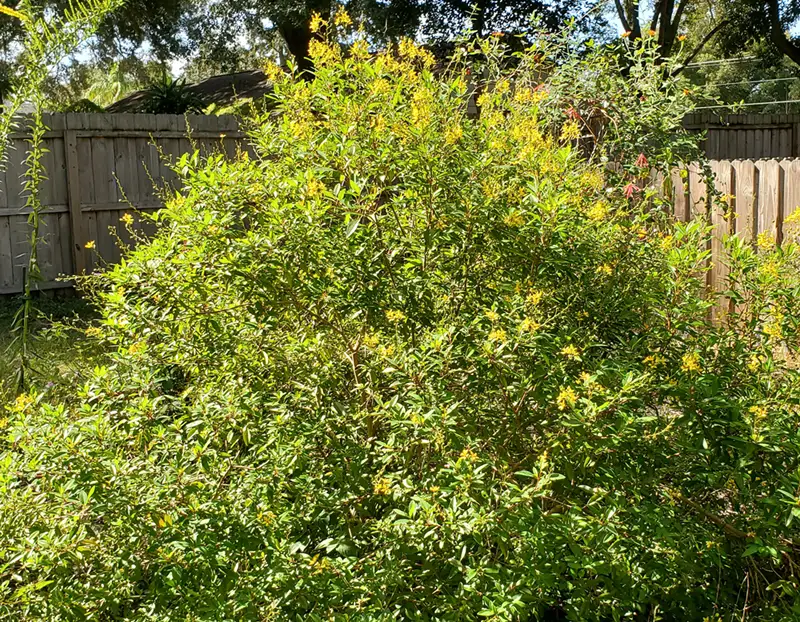
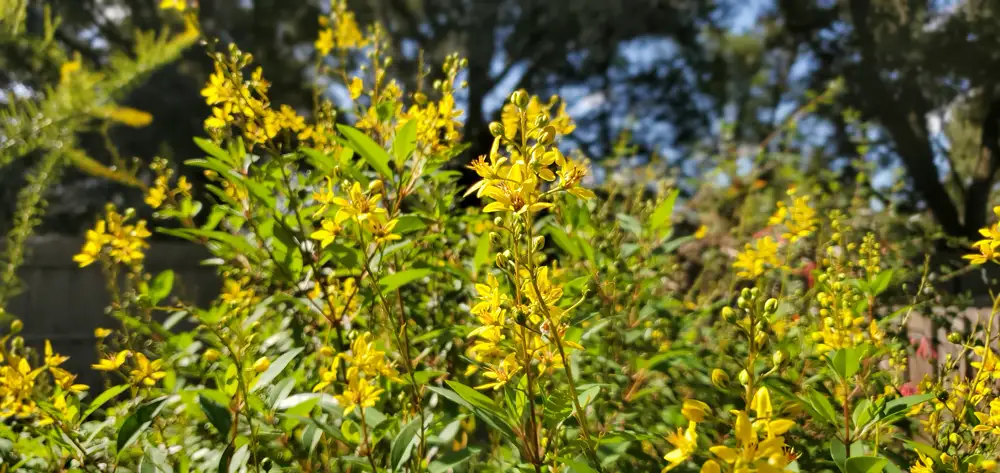
Also known as “rain of gold”, thryallis is a full-sun flowering shrub that can reach upwards of 5 to 9 ft. Because they can flower up to 10 months out of the year, they make an excellent choice for all-round color in your landscape. They are considered subtropical, but I have grown several in my yard and they have made it through quite a few freezes without protection.
Given a few light prunings, they will develop a beautiful round shape, or you can even prune them up into a tree shape. Just take care to be gentle as the branches can easily snap. I learned this the hard way by placing a bird feeder next to one, and the squirrels were using it as a launch pad! They snapped quite a few branches before I discovered what was happening and moved the feeder. Ha!
During the summer months, they are covered, and by covered I mean “plastered”, in cheerful yellow blooms. They draw butterflies, bees and other pollinators and can be a showstopper in your landscape.
PRO TIP
Thryallis are sold at box stores, but are priced more reasonably at local nurseries.
Shampoo Ginger
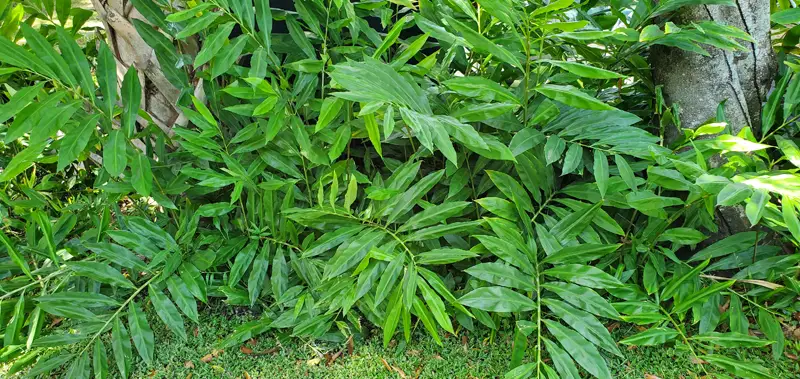
If you have a shady area that needs some pizzazz, and you would prefer to leave it mostly unattended, shampoo ginger is a great choice. Requiring almost no maintenance, this plant goes dormant during the cooler months and reappears early in the summer with long, deep green fans of foliage. Some fans can reach upwards of 5ft tall. Can you say “drama”? 😊
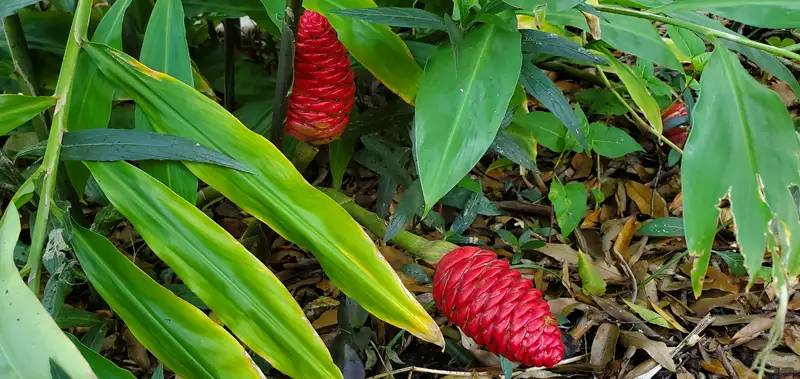
There’s plenty to love about this plant. During late summer/early fall, shampoo ginger will produce shoots with beautiful, vibrant 6-10” red cones and tiny white flowers. They basically look like a red pinecone on a stick! If you squeeze the cone, a sweet-smelling liquid will flow out of it. Some use it for shampoo, hence the name. Prized as “awapuhi” in Hawaii, it is valued for many other practical uses. Lastly, cuttings of both the leaves and flowers make beautiful, interesting flower arrangements as well. Lots of positives indeed!
Notable Tidbit
Once dormant, the dead, browned leaves of the shampoo ginger make great fire-starters!
Purple Heart
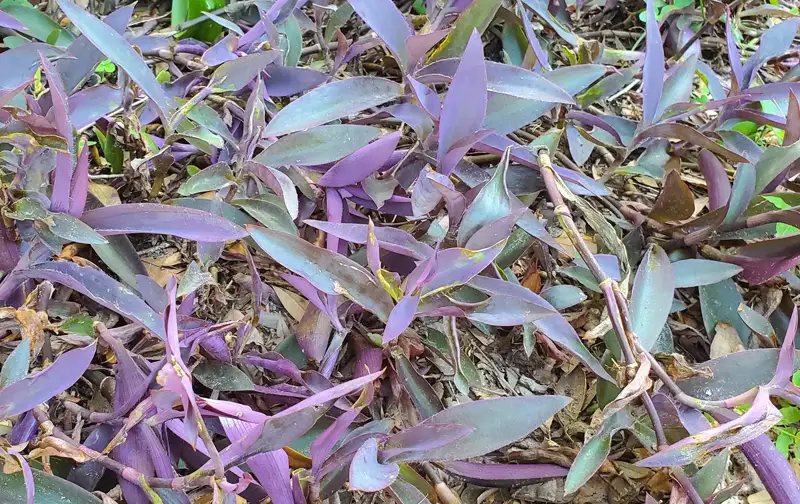
Purple heart was already growing in my yard when I moved into our home. Loving the color purple, I was immediately smitten. The plant’s deep eggplant shade looks almost like it was from the movie Avatar. I discovered that it is extremely easy to propagate, is drought-tolerant, and it grows in sun or shade. It also can survive extreme neglect in a pot!
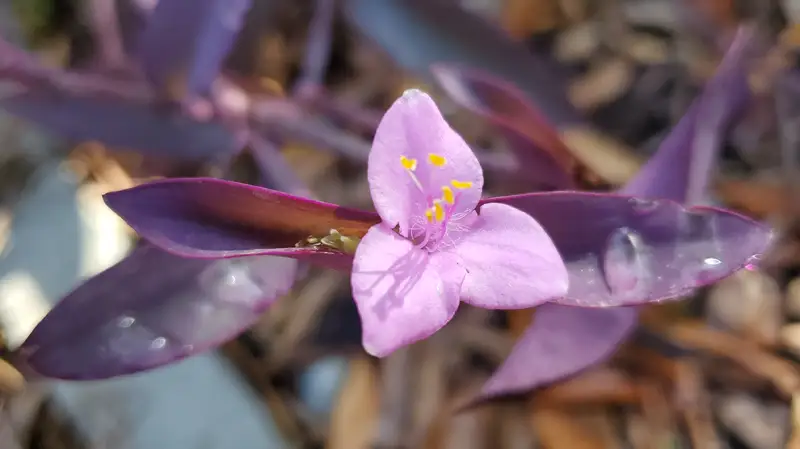
If its striking color isn’t enough, it also produces beautiful lavender blooms with yellow centers. If put in full sun, the color will deepen. But the color in the shade is still beautiful.
While it can be considered invasive, I have never minded it spreading throughout my yard. It has shallow roots, stays off the beaten path, and can be easily moved. It can also happily be corralled into a pot. To propagate it, snap a 4” piece off, stick it in dirt, water it, and it will grow! It really doesn’t get much easier than that. Left alone, it will fill in an area as a ground cover, or you can use it as a spiller in pots.
This plant is very fragile, and stems can snap very easily. Handle it gently, and it will be a great asset in your garden. You can also find variegated versions of this plant.
The Wrap Up
In conclusion, selecting the right plant for your growing zone is key. Any of the flowers I described should flourish in Zone 9B.

I encourage you to research them further at University of Florida – IFAS Extension – Gardening Solutions.
I have enjoyed them growing in my yard for years. I hope you will as well!